

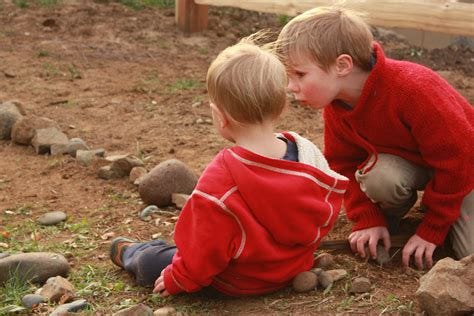
Play is an important way for children to engage with their world and to learn to master it. It’s both their work and their fun. It involves creativity, imagination, exploration, discovery, and curiosity and is important for healthy brain development. Play is serious learning. “Play is not frivolous; it is brain building. Play has been shown to have both direct and indirect effects on [brain] structure and functioning” (The American Academy of Pediatrics).
“Active, engaged, meaningful, social, iterative and joyful are characteristics that individually and collectively appear in a number of scientific articles that highlight processes involved in optimal learning….These same characteristics coalesce in play (Zosh, Jennifer M. et al. “Accessing The Inaccessible: Redefining Play As A Spectrum).
Some of the benefits of the different types of play are related to creativity, social skills, problem solving, language development, independence, fine and gross motor skills, relief of stress, and general brain development.
The different kinds of play, such as solitary play, group play, physical play, pretend play, etc., all give varying degrees of fun and pleasure. For children, they involve different levels of adult involvement ranging from adult guided play to free play. Free play means unstructured, child-initiated activity that comes naturally from children’s curiosity and love of exploring and discovery. It also means children choose how to play for themselves and there is minimal adult interaction. The importance of free play cannot be underestimated.
An article in Forbes magazine a few years ago asked what the key to prosperity was. The answer was “play” (Townsend, J.C., 2014 April).